Another Commanders season is unraveling. How did they get here?
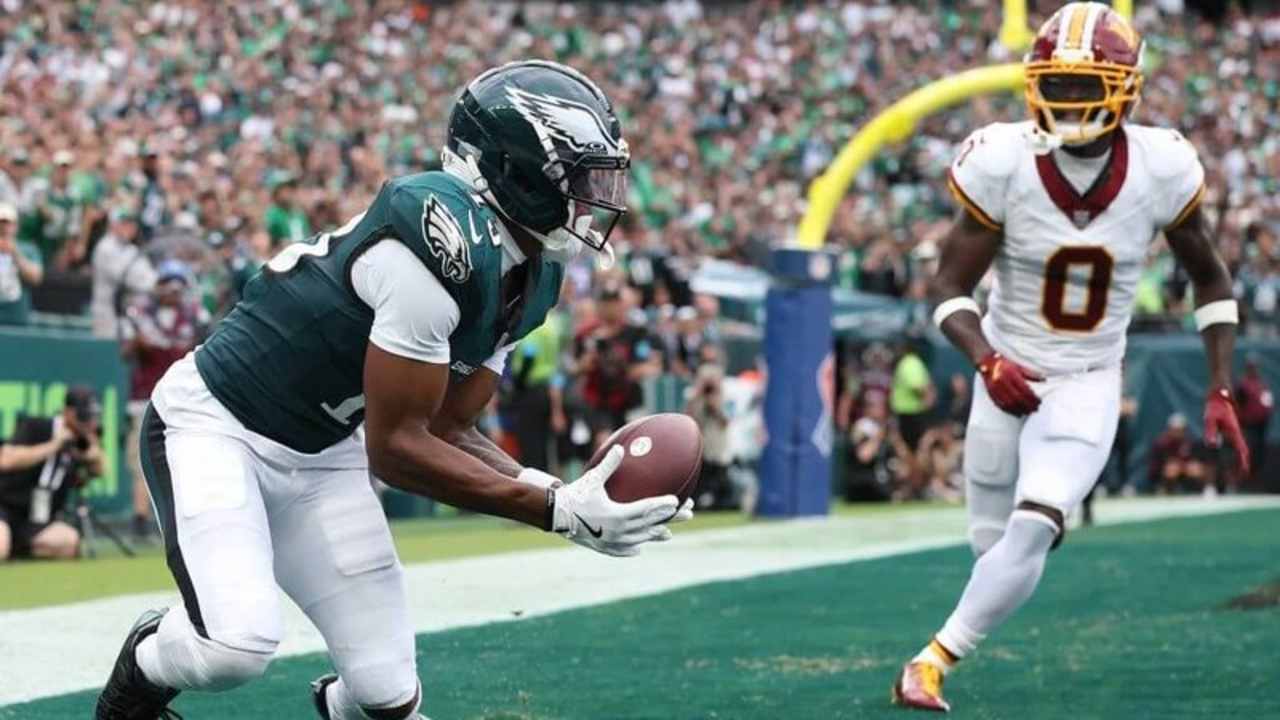
Winning in the NFL is hard enough. Attempting it without your star quarterback and his backup; without your premier left tackle as well as your top guard; without your top receiver, one of your best cornerbacks, your leading safety, a key linebacker and your leading returner is a task few teams are equipped to handle.
Yet, the Commanders find themselves in that unenviable position. What was supposed to be their "rebound" season is starting to feel a lot like 2025.
The number of injured Commanders players seems to increase almost daily -- there are 23 active players on the injury report and 17 either did not practice or were limited participants Wednesday. That undoubtedly played a leading role in the team's disappointing loss to the Colts in London that dropped its record to 1-3.
But injuries alone haven't caused Washington's spiral. Every NFL team has injuries. Some, like the 49ers, have endured even more -- to even more key players -- and have still won games.
Washington, however, has won only six of its 21 outings since appearing in the 2024 NFC Championship Game. How did the Commanders get here?
A false sense of optimism
General manager Adam Peters said during his introductory news conference in 2024 that he planned to build Washington's roster through the draft and supplement it with free agency. He reiterated his vision often, reminding that costly veterans may provide short-term returns without making a team better in the long run.
Peters inherited a mess of a roster, but then Jayden Daniels' record-setting rookie season changed the team's trajectory. It may have also created a misleading view of the team's progress.
The Commanders were winning and appeared closer to contending than most anticipated, so Peters decided to go for it. He sacrificed draft capital to acquire proven veterans and fill some premium positions, trading for cornerback Marshon Lattimore in 2024, and for tackle Laremy Tunsil and receiver Deebo Samuel the next offseason.
Of the three trades, only Tunsil has so far proven worth the cost, even though he's currently on injured reserve. Lattimore had more total defensive penalties (12) than games played (11) by the time he was released earlier this year; Samuel didn't provide the offensive boost the team had hoped for in his one season.
Instead of building through the draft, Washington built an old (the oldest, in fact) roster that was thin at multiple positions -- exactly what Peters said he hoped to avoid. He was also left with a smaller draft class.
The regression
Eight of the Commanders' 12 wins in 2024 came via a single possession, and six were decided on the last play from scrimmage. They had a palatable schedule, few injuries, an otherworldly quarterback and it was all just barely enough.
But when adversity struck in '25 -- when the schedule got harder, when the injuries piled up, when Daniels couldn't mask as many of their mistakes -- the Commanders couldn't overcome it.
Receivers Terry McLaurin and Noah Brown missed most of that summer because of a respective contract dispute and knee injury. So Daniels spent most of training camp throwing to Samuel and a group of unproven wideouts. Washington's offense struggled to find a rhythm in camp and, perhaps unsurprisingly, struggled again when both McLaurin and Brown suffered injuries in the regular season.
While the offense shone in '24, the Commanders' defense had a number of problems. Among them were chunk plays. The defense gave up 125 explosive plays in '24, tied for the ninth-most in the league. The problem only got worse the following season, when the team's defensive line and secondary were ravaged by injuries. The Commanders gave up 137 explosives last season, many of which were the result of missed tackles or missed assignments.
The defensive line was porous too, and only got worse when injuries hit.
Washington lost 32 players for a combined 156 games in 2025. But injuries didn't necessarily cause the Commanders' steep fall. Rather, they exposed roster holes and turned a regression into a full collapse.
Washington's defense ranked 32nd in yards and 27th in scoring last season after ranking 13th and 18th, respectively, in 2024. Good teams typically don't experience a fall that steep simply because they lose some starters.
The 49ers had even more injuries than Washington. Quarterback Brock Purdy, tight end George Kittle, linebacker Fred Warner, pass rusher Nick Bosa, receivers Ricky Pearsall and Brandon Aiyuk were lost for lengthy stretches, if not the entire season. And yet, San Francisco still finished 12-5.
The fall of the class of 2024
The Commanders' 2024 rookie class was a starting point for Peters, and the immediate returns from the group garnered the GM widespread praise.
He found Washington's quarterback of the future along with multiple key contributors. The Commanders' drafted rookies led the league with 64 combined starts and 4,074 offensive and defensive snaps in 2024.
But fast forward two years and that group doesn't quite look the same. The ineffectiveness or regression of multiple '24 rookies has added to Washington's woes.
Brandon Coleman, a third-round pick in 2024, shifted from left tackle to left guard after the Commanders acquired Tunsil. But Coleman was benched two games into last season and lost the starting job to Chris Paul. While filling in for Tunsil at left tackle this season, he's allowed 14 pressures, a team high and tied for the sixth-most among NFL tackles.
Cornerback Mike Sainristil, whom Peters lauded for his ball skills and speed when the team selected him in the second round in 2024, struggled at times last season and his play continued to devolve. Sainristil lost his starting job as an outside corner after Week 2 and was used only in nickel packages, as the slot corner. He still gave up two touchdowns in coverage during Washington's Week 3 win over the Seahawks, so in Week 4 his role was reduced further, to only five defensive snaps.
Johnny Newton, the undersized defensive tackle Washington landed in the second round, was described by Peters as "a three-down player" who "arrives violently" and is "exactly who we want to bring in this building."
But Newton's rookie season was delayed by injuries and his second season muddied by changes to the defensive line. His third season was cut short before it ever began; he suffered a pectoral muscle injury during training camp and is on injured reserve.
Ben Sinnott, a 2024 second-round tight end Peters described as a refined blocker with sure hands, struggled to get much time behind Zach Ertz in his first two seasons. Despite hope that he would thrive in David Blough's offense this year, Sinnott has only one catch for 6 yards. Coleman, the left tackle, has 13 receiving yards.
Then there's Luke McCaffrey, drafted in the third round in '24. He was used as a returner and backup receiver during his first two seasons. But it wasn't a certainty that he'd make this year's roster and has been active for only one game.
Fifth-round linebacker Jordan Magee and seventh-rounder Javontae Jean-Baptiste have had little impact this season because of injuries and the arrival of new talent.
It's still too early to know what Washington's 2025 and 2026 classes can be, but the signs are so far positive for their two first-rounders, right tackle Josh Conerly Jr. (2025) and linebacker Sonny Styles (2026).
An O-line misstep
Peters invested heavily in the offensive line over the past two years, extending right guard Sam Cosmi in '24, acquiring Tunsil and drafting Conerly in '25, and re-signing Paul in '26. But his decision to change centers has had a significant impact on the season -- and not in the way he hoped.
Peters signed Tyler Biadasz to a three-year deal in '24, but surprisingly released him a year before his deal expired, saving the team some $8 million in cash while leaving a hole in the middle of the line. Washington sought to upgrade the position and pursued Tyler Linderbaum in free agency, but it had no intention of handing him $27 million a year like the Raiders did, according to sources.
Instead, the team turned to Nick Allegretti, an interior lineman who took a pay cut this year after he was benched at guard early last season.
Peters repeatedly stated he had "a ton of confidence" in Allegretti and didn't add any other true competition at the position until after the season opener.
When Tunsil went down, Washington lost its best lineman as well as guard depth, since Coleman shifted to tackle in his place. Combined with Allegretti's extended absence in training camp because of a calf injury, Washington had a long look at the team's minimal depth on the interior line and still declined to add viable competition. Julian Good-Jones, a practice-squad lineman with only two career offensive snaps, took the bulk of the reps at center, and rookie Matt Gulbin rotated in at various points.
The results were concerning, at least to some outside observers, but Peters was resolute.
"Obviously, our fans are passionate, and you love to have passionate fans and that's great," Peters said in late August, after stressing his confidence in the roster. "But there's a lot of stuff that we're doing here that maybe they don't see, and there's a lot of things that I'm really excited to see in a couple of weeks."
But the first four weeks of the season have validated those concerns. Allegretti was benched at center after two games in favor of Lucas Patrick, a veteran who signed with the team after its season opener. Allegretti was supplanted at guard the following week when Washington opted to start Gulbin in place of Cosmi. Gulbin gave up two pressures to the Colts, including a sack -- the one that resulted in backup quarterback Marcus Mariota suffering an MCL sprain in his right knee. That injury set the stage for another loss, Washington's 13th in its last 16 games.
This article originally appeared in The Athletic.