Matthew Stafford, Sam Darnold and Cam Ward are struggling: Can three high-profile QBs get right?

Former NFL player and scout Bucky Brooks knows the ins and outs of this league, providing keen insight in his notebook. In today's installment, he digs into the struggles of three prominent signal-callers.
The quarterback position is eternally volatile, with even the best players experiencing ebbs and flows from year to year (if not game to game). Right now, we're seeing struggles from a trio of high-profile signal-callers at completely different stages of their careers.
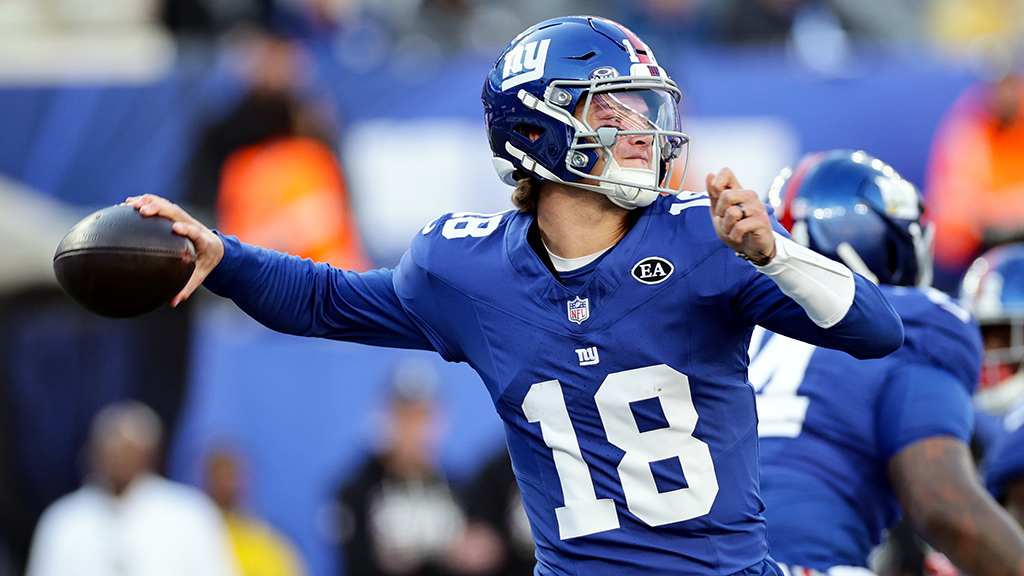
At age 38, Matthew Stafford is in his 18th NFL season, fresh off his first MVP award. Although he leads the league in a number of volume statistics (attempts, completions, passing yards), Stafford hasn't looked the same in 2026, and the preseason-darling Rams are a shocking 2-4. Not to mention, Stafford will now be without Davante Adams for the next 6-10 weeks.
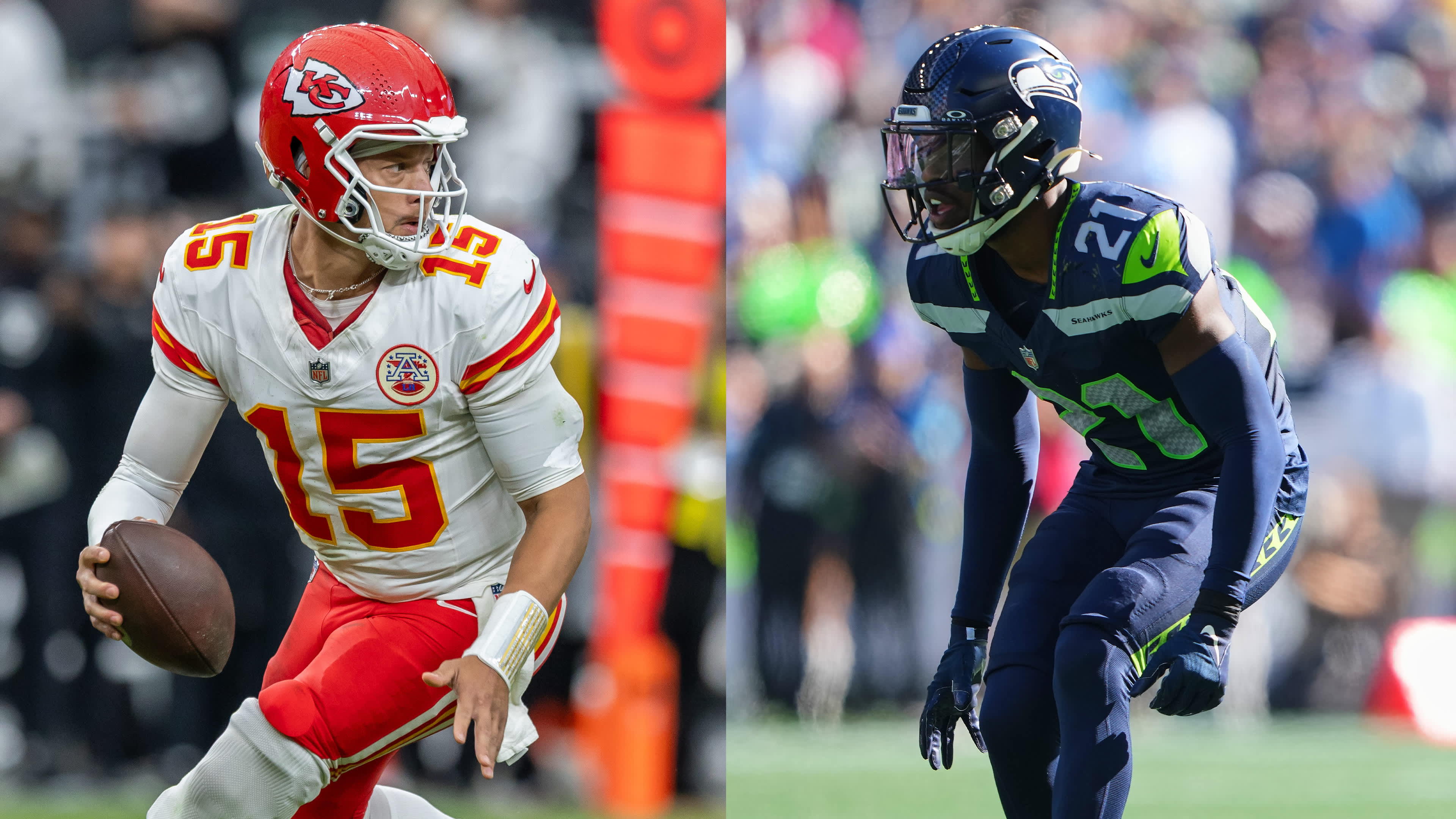
Sam Darnold earned his second straight Pro Bowl bid last year, helping the Seahawks win the Super Bowl. But after seemingly settling into his role as a true franchise quarterback for a contender, the 29-year-old appears to be turning back into a pumpkin, with seven interceptions in Seattle's last four games (three losses).
Cam Ward didn't exactly light the world on fire as a rookie starter for the Titans, but major coaching and personnel changes were supposed to spark a second-year jump from last year's No. 1 overall pick. Instead, the 24-year-old ranks near the bottom of the league in most categories, including passing yards per game (166.3), yards per attempt (5.6) and passer rating (75.0).
So, what's going wrong for last season's MVP, Super Bowl-winning QB and No. 1 pick? Can their problems be fixed? Here are my thoughts.

WHAT'S THE PROBLEM?
After torching the league in 2025 with an NFL-best 4,707 passing yards, a 46:8 touchdown-to-interception ratio and a 109.2 passer rating on the way to claiming his first MVP award in his 17th season, Stafford was expected to keep the good times rolling with a Hollywood dream team around him. Los Angeles came into this season as a prohibitive Super Bowl favorite, with this year's Lombardi Trophy game taking place in the Rams' home of SoFi Stadium.
However, things haven't gone according to plan, to say the least. The Rams have stumbled out of the gate to a 2-4 record with a sputtering offense that looks nothing like the high-powered unit that led the league in scoring one year ago.
Part of Stafford's woes can be attributed to the constant pressure and harassment he faces in the pocket. The seasoned veteran looks uncomfortable amid the storm, leading to errant throws and poor decisions. These miscues are uncommon for a supreme passer and playmaker who routinely throws darts into tight windows. Against the blitz, Stafford has completed 42 of 68 passes (61.8%) for 566 yards with five touchdowns and three interceptions. Meanwhile, he has connected on 122 of 181 passes (67.4%) for 1,228 yards with six touchdowns and three interceptions from a clean pocket.
The All-22 film is even more illuminating than the stats; Stafford has wilted under the weekly barrage of pressure. Teams are turning up the heat with a mix of blitzes that keep the veteran from getting into a groove by stacking intermediate-range completions. The reigning MVP has looked out of sorts and jittery with defenders nearby, leading to more errant throws and poor decisions than we are used to seeing from him.
With his receivers also failing to gain consistent separation from sticky coverage, Stafford has been forced to choose between tight-window throws and checkdowns to keep the offense on schedule. In the Rams' stunning loss to the Cardinals last Sunday, the three-time Pro Bowler completed 25 of 33 passes for 222 yards and two scores. According to Next Gen Stats, he posted a meager mark in air yards per attempt of 4.8 -- his lowest average of the season -- throwing 21.2% of his passes at or behind the line of scrimmage. This small-ball approach has not treated Stafford and the reeling Rams well.
IS IT FIXABLE?
To get Stafford back on track, the Rams need to return to basics on offense. Instead of putting the burden on No. 9 to carry the offense as a passer, the team should re-establish Kyren Williams and Blake Corum as workhorse rushers who can find creases and cracks between the tackles or outrun defenders to the corner.
That said, the Rams also should consider scaling back their play-action package, since teams blitz them relentlessly whenever Stafford aligns under center. Although the Rams have successfully married the running game and passing attack throughout Sean McVay's tenure, they should incorporate more shotgun to allow Stafford to deliver quick-rhythm throws, offsetting the pressure with hot routes and sight adjustments.
As opponents opt to attack Stafford with exotic pressures to blow up the Rams' pass-protection schemes, McVay must counter with screens and "now" passes to playmakers who can turn short receptions into big gains and punish defensive coordinators for risky strategies. With Davante Adams injured, Konata Mumpfield, Jordan Whittington and Tutu Atwell should get more opportunities as catch-and-run specialists on the perimeter. By shifting to a faster attack that removes some of the "bigs" on the field in favor of speedsters with the shiftiness to make defenders miss in space, the Rams can counteract the aggressive tactics opponents use to disrupt Stafford's rhythm. Moreover, they can help the field general get back on track as a premier pocket passer.
RELATED CONTENT

WHAT'S THE PROBLEM?
Despite helping Seattle win a Super Bowl a season ago, Darnold has been a turnover machine, with 27 giveaways since the start of the 2025 season. Questionable decisions and reckless ball security have been part of a team-wide problem that has kept the 3-3 Seahawks from maximizing their potential in 2026.
Studying the All-22 tape, Darnold's turnover issues stem from a mix of judgment errors and clever defensive tricks that force the veteran into critical mistakes. These self-inflicted miscues are part of a career trend in which he tries to make hero throws or fails to secure the ball in traffic. Although several coaches have tried to work with him to curb his ball-security woes and game-management errors, Darnold hasn't consistently shown enough patience and discipline to avoid game-changing mistakes at pivotal moments.
Schematically, the Seahawks haven't adjusted to how opponents defend the offense following the unit's 2025 success. After completing 62.2% of his outside-the-pocket passes last season, per Next Gen Stats, Darnold is only connecting on 42.9% of this year's throws on the move. Having seen the signal-caller punish defenses with 842 passing yards and seven touchdowns on various movement-based throws in 2025, opponents clearly spent the offseason building traps to neutralize Darnold's effectiveness as a playmaker outside the pocket.
With Darnold also thriving as a passer in under-center formations last season (10.8 yards per pass attempt, 18 touchdowns and six interceptions), defensive coordinators have adjusted by throwing a few curveballs at the Seahawks to disrupt the offense's flow. As a result, Seattle's QB1 has been unable to find his rhythm on dropbacks, leading to hesitation and questionable decisions.
With a 3.10-second average time to throw (fifth-highest among qualified quarterbacks) and a 42.3-percent pressure rate (also fifth-highest), the vet's clever back-end tricks have led to more sacks and fewer completions.
IS IT FIXABLE?
Seattle's franchise quarterback must play the game right and avoid risky passes that lead to interceptions off tips and overthrows. Additionally, the coaching staff can give Darnold a more conservative script that swiftly gets the ball out and into the hands of top pass catchers -- particularly Jaxon Smith-Njigba -- on high-percentage throws. Although opponents are trying to take away the 2025 Offensive Player of the Year with cloud coverages -- Cover 2 (two deep and five under) and Cover 6 (quarter/quarter/half) -- JSN remains an unstoppable force on the perimeter, with a league-leading 357 yards against those tactics. Given the heavy usage of cloud against the Seahawks and Darnold (33.1% of his dropbacks, per NGS), the QB must anticipate defenders lurking in the flat and avoid carelessly throwing the ball to the sideline without double-checking before his release.
If the Seahawks can create game plans with more cloud beaters on the menu -- with JSN, Cooper Kupp and Rashid Shaheed positioned to take advantage of the underneath defenders -- Darnold should be able to attack the umbrella coverage with pinpoint throws to pass catchers who find the open windows. While Darnold must demonstrate more patience with opponents taking away the big plays on the perimeter, the quarterback can get the offense back on track by peppering the opposing defense with dink-and-dunk passes to his best playmakers.
Seattle Seahawks quarterback Sam Darnold discusses Week 6 loss to Denver Broncos.

WHAT'S THE PROBLEM?
Since arriving as a ballyhooed prospect out of Miami, last year's No. 1 overall pick has been a major disappointment for the Titans. Ward has struggled under three different play-callers, looking nothing like the quick-rhythm assassin who wowed evaluators during the 2025 pre-draft process.
While it is easy to pin the passer's problems on a dysfunctional organization that failed to surround the young QB1 with elite playmakers or a system that can operate without a marquee WR1, the quarterback's fundamental flaws and accuracy issues make it hard for others to do their jobs.
Studying the All-22 film from the past two years, Ward's mechanics are a mess. His footwork is all over the place, and his uncertainty with his progressions leads to errant throws to the perimeter. Additionally, the Titans' pass catchers haven't consistently gotten open in a scheme that doesn't look like a perfect fit for the passer.
Perhaps offensive coordinator Brian Daboll is spinning his wheels trying to find a handful of concepts that work for his quarterback and playmakers, but Ward has really struggled in the first six games of 2026. The 6-foot-2, 219-pounder hasn't thrown a touchdown in the first three quarters of a game, and his slow starts have repeatedly put the 1-5 Titans behind the eight ball.
Whether facing pressure or throwing from a clean pocket, Ward has been off the mark, and his inconsistent ball placement is part of why he averages just 166.3 pass yards per game. Teams have dared Ward to win from the pocket against traditional coverages with various pre-snap disguises, but the second-year pro hasn't cracked the code, and his hesitation bogs down an offense that needs completions to stay on schedule and move the chains.
IS IT FIXABLE?
It is rare for a first-round quarterback to lack the talent and intangibles to play in the league. Ward was widely viewed as the QB1 of the class, and his playmaking ability made him a hot commodity in league circles after general managers, coaches and scouts assessed his college tape at Incarnate Word, Washington State and Miami.
While the clock is ticking on his tenure with the Titans -- especially with a new coaching staff in place this season -- the second-year pro remains a salvageable project if his work ethic, attitude and intangibles match what head coach Robert Saleh wants in a QB1. Routinely earning Saleh's support in recent weeks, the young quarterback will get a chance to work through his struggles in a supportive environment that wants him to succeed as the face of the franchise.
That said, Ward needs a fundamental makeover that overhauls his footwork and pocket mechanics. He also needs more time to master the current system, so he can play fast and free from the pocket. If the Titans decide the scheme isn't a perfect match for Ward's skills, they could tweak it to better mesh with his strengths and the abilities of his supporting cast.
Although the top pick has been brutal thus far, the Titans must exhaust every option before casting aside a talented but struggling passer.