
We are squarely in recognition season, with the 2026 Pro Bowl Games (Tuesday, Feb. 3 at 8 p.m. ET on ESPN/DisneyXD/NFL+) and NFL Honors (Thursday, Feb. 5 at 9 p.m. ET on NBC/NFL Network/NFL+) coming up. But not EVERY important performance drew public accolades.
Below, Kevin Patra has identified one unsung hero from every NFC team, explaining how each player rose to the occasion in 2025, even if they weren't officially given their flowers in the form of a Pro Bowl or first-team All-Pro nod. Note: Stats reflect regular-season performance unless otherwise noted. Click here to see the names from the AFC.


The old man can still play. In his return to Arizona, the 39-year-old Campbell generated 6.5 sacks, second most on the team, with 28 QB pressures and 43 total tackles. He added two passes defensed and blocked a field-goal try for the 10th time in his illustrious career. Fourteen of those pressures came while he was being double-teamed, the fifth most such pressures in the NFL in 2025. A lot went wrong in Arizona this season, but bringing back the ageless wonder wasn't one of them. Imagine the Cards' defense if Campbell hadn't been on the field for 17 games.


With many observers focusing on the young edge players in Atlanta's reworked defense, it seems Onyemata's play was relatively overlooked. In his third season in ATL, the big man anchored the middle of the defense as a top-10 run defender, earning seven tackles for loss and a career-high 62 tackles; he also added 18 quarterback pressures from his interior position. His 13 run stuffs led the club, with the Falcons allowing a yard more per rush with Onyemata off the field.


Lewis was a clear choice as the unsung hero to single out following the Panthers' turnaround. The sixth-year pro excelled in his second season in Carolina, driving defenders off the ball in the run game. His film is littered with pancakes and opposing linemen being pushed downfield to open holes in the ground game. Lewis also enjoyed his best season as a pass protector, grading in that area of the game as a top-five guard, per Pro Football Focus, which credited him with allowing a single sack and just 13 QB pressures on 553 pass-rush snaps over 16 regular-season games.


In a magical season for the Chicago, most Bears received their just flowers, from a highly-praised offensive line to a turnover-crazed secondary to the young playmakers on defense. Had he played a full season, Booker would have surely garnered more of the spotlight. Thanks to a knee injury, he didn't make his 2025 debut until Week 9 -- but even so, Booker finished third on the Bears' D in both sacks (4.5) and QB pressures (30), generating a 9.9% QB pressure rate over the final 10 regular-season games. In the first seven weeks of the Bears' season, Chicago generated a 28.7% QB pressure rate (27th in the NFL) with 9.1 pressures per game (31st). After Booker entered the lineup, those numbers went to 33.2 % (21st) and 12.5 pressures per game (14th). I'm not suggesting Booker gave the Bears a monster pass rush, but his presence undoubtedly got them closer to respectability. The second-year pro is still rough around the edges, and Chicago must add more QB-chasing oomph, but Booker is on the same trajectory as his upward-trending team.

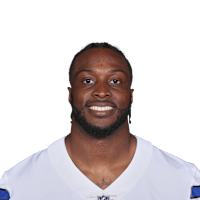
The Cowboys found a legit third receiver. In his second season, Flournoy generated 475 yards on 40 catches (11.9 yards per catch) with four touchdowns. As a beneficiary of the defensive attention paid to CeeDee Lamb and George Pickens, Flournoy thrived, generating 0.09 EPA per route, 11th-best among all receivers with at least 200 routes run. His 0.45 EPA per target finished second on the Cowboys, behind only Pickens. Assuming Jerry Jones finds a way to retain Pickens, Dallas will enter 2026 with an excellent trio as the team looks to return to prominence.


The veteran linebacker was the glue that held the Lions' defense together for as long as possible. Anzalone finished with 95 tackles, second on the team behind All-Pro Jack Campbell, and nine passes defensed, including one INT. He generated 2.5 sacks with 17 QB pressures on 91 pass rushes for an 18.7% pressure rate. Among Lions defenders with at least 200 coverage snaps, Anzalone’s -0.31 EPA per target was tops. A leader on a defense decimated by injuries, the linebacker helped keep a unit that could have easily been one of the worst in the league above water under first-year coordinator Kelvin Sheppard.


With stars like Micah Parsons and Xavier McKinney garnering plenty of attention, Williams’ solid play likely got lost in the shuffle for most observers. The second-year safety authored an all-around strong campaign, generating three interceptions, five passes defensed and 89 tackles, with four TFLs. Williams’ ability to play multiple spots was utilized heavily by defensive coordinator Jeff Hafley. According to PFF, the safety spent the bulk of his snaps aligned deep (510) but also played in the box (303) and manned the slot at times (135). That skill set allowed the Packers to be much more diverse in their defensive packages.


The former fifth-round pick didn't just fill the void at left by right tackle Rob Havenstein's absence due to injury -- he improved the Rams' offensive line. In 10 regular-season starts, McClendon allowed 12 pressures and one sack, per PFF, compared to 22 pressures and a sack in seven games from Havenstein. McClendon also helped boost the run-blocking, bulling open holes on the ground and morphing into one of the better road-grading offensive tackles this season. The sledding got a bit tougher in the playoffs (11 pressures and one sack allowed), but still; this was a rare example of a team stumbling into a better situation with an injury fill-in.


Wilson struggled in coverage, but when he was moving forward, oh baby, did he have a massive impact on Brian Flores’ defense. Seemingly every game, Wilson made a splash play, generating 6.5 sacks and 108 tackles, including 17 TFLs. The ninth-year pro led all linebackers with 36 QB pressures, per PFF. His 20 runs stuffs were tied for third-most among all players in 2025, per Next Gen Stats. A free agent this offseason, Wilson should stick with Flores.


Most eyes were on Tyler Shough’s impressive end to the season, putting the Saints on a path to contention in 2026. But the quarterback wasn’t the only rookie who came on strong. Banks, the Saints' first-round pick, went through some first-year struggles but rounded into form, offering a glimpse of his potential ability to help solve the issues that have persisted along New Orleans' offensive line. While still rough around the edges, the 315-pound left tackle played well to close the season before suffering an ankle injury in Week 18. In the final four weeks, Banks allowed just one sack and proved he can be one of the better run-blocking tackles, grading out as PFF’s No. 5 run blocker at the position from Week 14 on.


One positive from the Giants' otherwise forgettable campaign: The pass protection wasn't a complete disaster this time around. Andrew Thomas' ability to play in more than a handful of games was a big factor, but Eluemunor also did his part on the right side. While not a great run-blocker, the 31-year-old was steady in the pass game, allowing 19 QB pressures, tied for the eighth-fewest among players with at least 580 pass-blocking snaps, per PFF -- and if we filter by position, that mark tied for the lowest among OTs.


As part of a talented Eagles defense, Campbell flew under the radar as a rookie, but the first-round pick was stellar, outside of a midseason lull during which he was the odd man out in a stacked linebacker rotation. Campbell finished the regular season with 76 tackles, 11 QB pressures, three passes defensed and a forced fumble. With an athletic profile, he excelled in pass defense, finishing as a top-five linebacker in coverage grade, per PFF. Heading into 2026, Vic Fangio should find a way to get Campbell, who played 63 percent of the Eagles’ defensive snaps, on the field more.


With injuries riddling San Francisco's roster, Kyle Shanahan’s offense needed to unearth production from unexpected places. He found it in Tonges. The backup tight end’s regular-season numbers don’t pop off the screen: 34 catches on 46 targets for 293 yards and five touchdowns. That will happen when George Kittle is the top target on the depth chart. But this was a serious uptick in usage for a player who’d caught zero passes in his career after going undrafted in 2022, with much of his production (29 catches, 269 yards, three TDs) coming in games Kittle missed during the regular season. Niners QBs had a 126.4 passer rating when targeting Tonges in 2025, sixth-best among all TEs with at least 40 targets, per NGS. Given that Kittle is questionable to start the 2026 campaign after suffering a torn Achilles, keeping the restricted free agent around seems like a no-brainer for San Francisco.


In Year 2, Barner became a key weapon in the top-seeded Seahawks offense, generating 52 catches for 519 yards and six touchdowns. Barner proved a pivotal outlet for Sam Darnold, particularly in high-leverage situations. Five of the TE’s six touchdowns came in the red zone, and Darnold posted a 137.8 passer rating when targeting Barner inside the 20-yard line, second-best mark of all tight ends with at least 10 targets (behind only Tucker Kraft), per NGS. Barner generated a 12.9% success rate per route, third-best among tight ends with at least 250 routes run, behind only George Kittle and Trey McBride. And let’s not forget about "the Barn Yard" -- the tight end converted 10 of 11 attempts in short-yardage push plays, with one touchdown.


Goedeke’s importance to the Bucs offense was highlighted in the six games he missed. The right tackle didn't allow a sack in 11 games this season. After returning from injury in Week 10, he allowed just 17 QB pressures. Solid across the board, Goedeke proved to be one of the Bucs' most crucial offensive pieces, alongside bookend Pro Bowler Tristan Wirfs. If the right tackle can stay healthy after missing games each of the past two seasons, Tampa’s offense will be more potent in 2026 under new OC Zac Robinson.

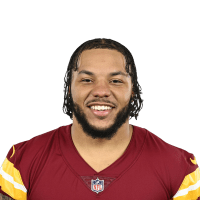
The Commanders' offense wasn’t pretty, and the ground game struggled for spells. But while rookie Jacory Croskey-Merritt generated plenty of buzz, Rodriguez proved a stabilizing force when Washington turned to him down the stretch. Of his 500 yards and six TDs on 112 carries, 381 yards and five scores came on 85 attempts in the final seven games. The third-year back’s .03 rush EPA per carry ranked tied for fifth-best among all RBs with at least 100 totes (compared to Croskey-Merritt’s mark of -0.06). Rodrguez earned a 45.5% success rate on carries, with 29 missed tackles forced; he also averaged 3.46 yards after contact forced per carry. He might not profile as an every-down back, but Rodriguez proved valuable in 2025.


